Back to featured work

Automation / Observability

AI-Enhanced Operations Automation Suite

A TARS-style n8n DevOps assistant and workflow layer that turned incident-response steps, alerts, and operational noise into faster, safer action.

This project focused on operational clarity and response speed. Instead of letting alerts, runbooks, pipeline state, and diagnostics live in disconnected systems, I built a TARS-style automation layer that could route signal, assist with execution, and reduce the amount of repetitive incident-response work that had to be done manually.

n8nGitHub ActionsSSH workflowsSlackTelegramMonday.comDiagnostics
Why it mattered

It matters because incident response gets expensive when context is fragmented and every action starts from zero. The work here was about making the right information visible, explainable, and actionable fast enough for teams to move with confidence.

Role

Designed and implemented the assistant and workflow automation layer, including event routing, diagnostics visibility, workflow execution paths, and the safety boundaries around sensitive operational actions.

Constraints

  • Needed near real-time visibility without adding a heavy new internal platform.
  • Operational updates were spread across chat, project tooling, CI/CD, and infrastructure systems.
  • Sensitive actions like SSH, repo access, and infrastructure handling needed explicit guardrails, not just convenience.
  • Project details had to remain sanitized, so the case study focuses on workflow design, safety posture, and outcomes rather than sensitive internals.

System approach

Signal Intake

Collected uptime, DevOps events, diagnostics, and pipeline context from existing systems and normalized them into workflows a human operator could reason about quickly.

Assistant-Orchestrated Response

Used n8n to route events into Slack, Telegram, and project surfaces while also preparing incident-response actions, debugging context, and next steps around the same stream of information.

Guardrails and Operational Memory

Kept human-in-the-loop decision points around sensitive systems, while automating board updates and status propagation so the workflow stayed useful without becoming reckless.

Podcast feature

TARS on Teller's Tech

I joined Brian Teller on the Teller's Tech Ship It Conversations podcast to break down TARS, my n8n-based DevOps assistant for automating incident response work without removing human judgment where it matters.

  • Talked through how TARS connects into GitHub Actions, pipelines, SSH across multiple servers, diagnostics, and debugging context.
  • Explained how runbooks and repetitive incident-response steps can be translated into coded workflows that stay fast, adaptive, and useful.
  • Made the guardrails explicit: access to repos, servers, and infrastructure should be designed with caution first, not bolted on later.

This is useful proof because it shows the system can stand up in public explanation, not only in private implementation. It also gives the project a human voice beyond screenshots and metrics.

Host: Brian Teller Topic: DevOps, AI agents, incident response

System evolution

FRIDAY became TARS by moving from visibility to guarded action.

FRIDAY started as a server-status bot that kept me ahead of downtime with fast notifications. TARS pushed the system further into incident response, human-in-the-loop decisions, and agent-assisted execution across my DevOps workflow.

Phase 01 Monitoring-first assistant
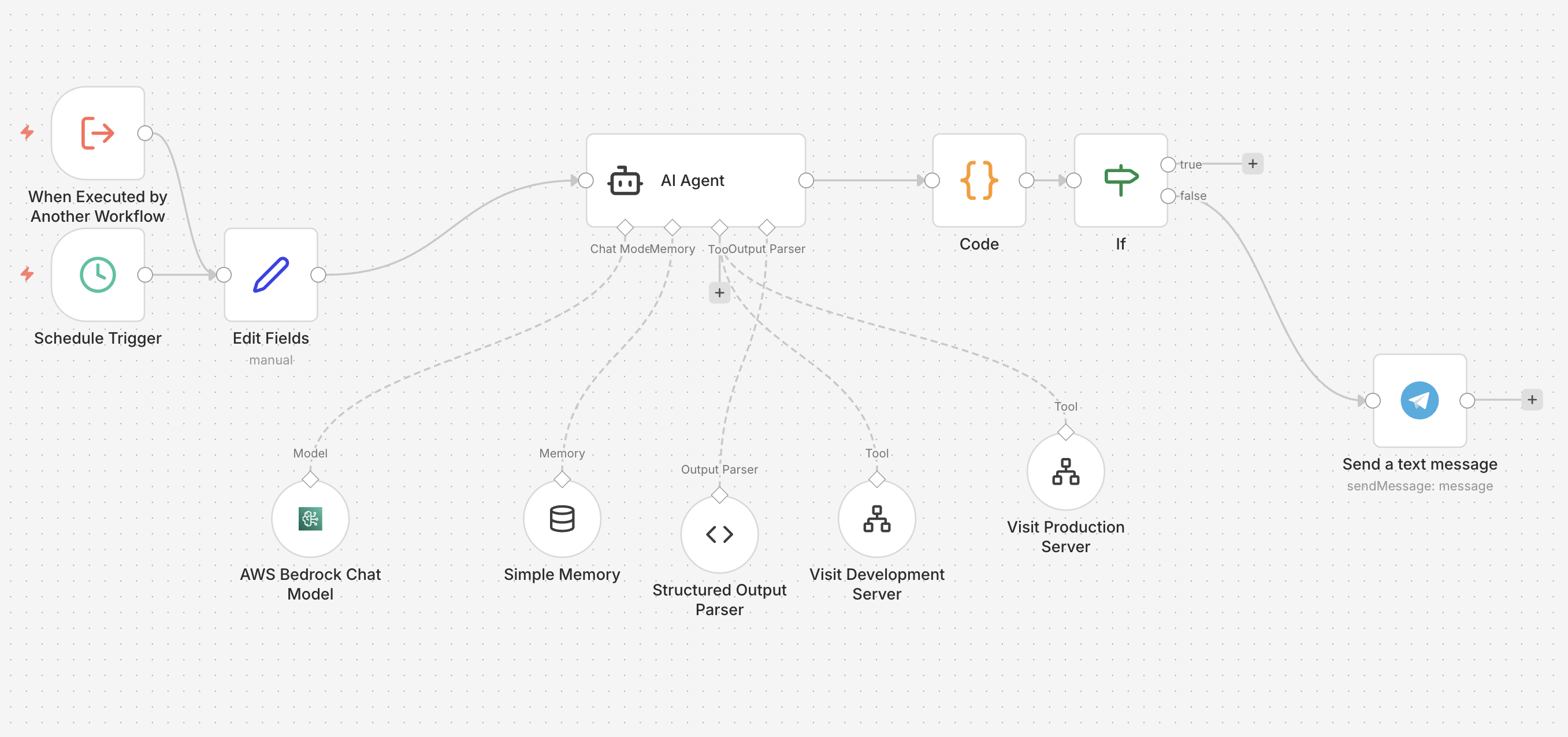
FRIDAY n8n workflow screenshot

FRIDAY

A server-status bot that monitored uptime and downtime, then pushed alerts into channels like Telegram or Slack before QA or clients felt the issue.

The important move here was proactive visibility: less manual checking, faster awareness, and a stronger base for operational decision-making.

Phase 02 Human-guided DevOps agent
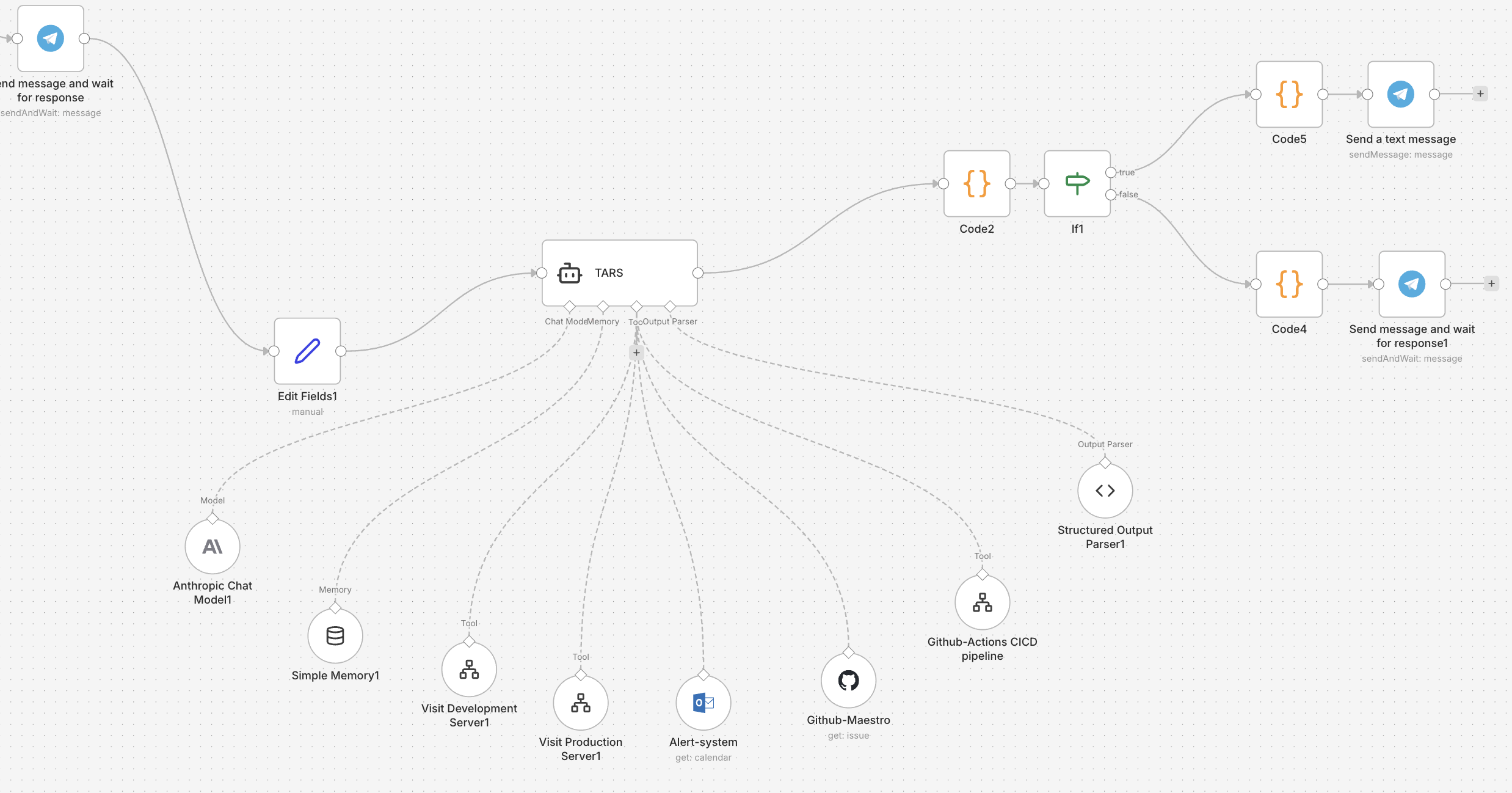
TARS n8n workflow screenshot

TARS

A more capable DevOps agent with GitHub Maestro, CI/CD pipeline visibility, alert-system context, server actions, and explicit human-in-the-loop checkpoints before major fixes.

The architectural shift was not just more automation. It was safer automation, split across focused agents so no single bot owns the whole system.

Outcomes

  • Reduced manual reporting by 40%.
  • Improved response time to critical system events.
  • Created a cleaner operational surface for engineering and product coordination.
  • Explained the system publicly on Teller's Tech, which validated that the design held up as a real operational narrative and not just an internal workflow.

What it says about me

This project reflects the kind of engineering work I enjoy most: turning scattered operational systems into something faster, safer, and explainable under pressure.